

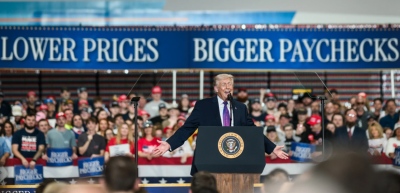
Europe watches helplessly as US President Donald Trump tightens the reins on the Middle East, turning European leaders into weak pawns and extras in a war that threatens to overturn balances, trigger new refugee crises, and test the very credibility of transatlantic ties. During a meeting with the Chancellor of Germany, Friedrich Merz, at the White House on March 3, President Donald Trump publicly announced that he had ordered "all relations be severed" with Spain, following Madrid's refusal to allow the US access to shared local facilities for strikes against Iran. A similar decision by the United Kingdom led Trump to state, referring to Prime Minister Keir Starmer, that "it is not Winston Churchill we are dealing with."
These tensions are not unprecedented. For example, the Bush Jr. administration had fiercely criticized France, Germany, and other European countries for their refusal to join the Iraq War in 2003. Furthermore, Trump has clearly shown his contempt for European allies since his return to power. However, the US war against Iran and the push for greater European involvement are misdirected. The Trump administration contradicts its own declared strategy, having previously criticized the tendency of prior governments to treat allies "as dependents and not as partners," calling on them to "take action" and insisting that he does not want "Europe as a vassal." Trump's hasty reaction ignores Europe's experience in the region. The European leaders who condemned the Iraq War in 2003 correctly predicted that the campaign would have catastrophic results for the US, Europe, and Iraqis. Similarly, today's European skeptics, despite the influence of domestic political factors, correctly point out that the new US "war of choice" is "being conducted outside international law," lacks a "feasible, well-thought-out plan," and means the US is playing "Russian roulette with the fate of millions of people."
Risks to transatlantic relations
Transatlantic tensions may worsen due to the dispute. Trump's pressure led Spain to a tougher stance and the EU to show solidarity with Madrid. The possibility that the US might redirect already purchased weapons to the Middle East raises questions about America's reliability. These issues could undermine Washington's ability to effectively withdraw from Europe, which depends on transatlantic coordination. Nevertheless, while tensions could push Europe to gradually reduce its dependence on the US, the war will likely increase the region's reliance on America.
The stance of European leaders
Despite their frustration, most European leaders avoided condemning the war to avoid displeasing Trump. For example, Eastern European countries declared full support. Despite his concerns, Chancellor Merz insisted that "it is not the time to lecture our partners" and remained silent while Trump rebuked Madrid and London—although Berlin later showed solidarity with its European allies. Above all, Germany, Italy, France, and other countries have authorized the US to use their bases or have otherwise supported the campaign. The United Kingdom opened its facilities for "defensive strikes."
Dangers for Europe
This near-total submission could give Washington an advantage and encourage Europe to participate in the war. Despite the harsh rhetoric, the Trump administration, now realizing it may have underestimated Tehran, "expects all of Europe… to cooperate… to destroy the ruthless Iranian regime." Europe's strength could weaken, burdening Washington with even weaker allies. As a major energy importer, Europe remains vulnerable to disruptions in the Middle East. Due to Iran's large population, the refugee flow to Europe could be much larger compared to previous conflicts. Europe's geographical position also makes it more vulnerable to Iranian terrorism than the US. The war in Iran could also reignite disagreements in Europe regarding the use of force and make the local population more hesitant to increase defense spending, hindering US burden-shifting goals.
Europe's gradual involvement
European leaders could gradually increase their involvement to protect their citizens in the Middle East, support Arab allies, and, most importantly, satisfy Trump's demands. However, Iran considers all participants "legitimate targets," as seen by missiles hitting a French base in the United Arab Emirates or heading toward Turkey's airspace before being intercepted—raising questions about the potential NATO response. These risks could increase over time due to Trump's indifference to Iran's long-term stability, especially if he pushes for further escalation. Instead of pressuring European countries to step up their participation in the war in Iran, the US should end its new adventure in the Middle East and focus on reorienting inward.
www.bankingnews.gr





Σχόλια αναγνωστών